Why the Resident Evil Movie Franchise Still Attracts Fans
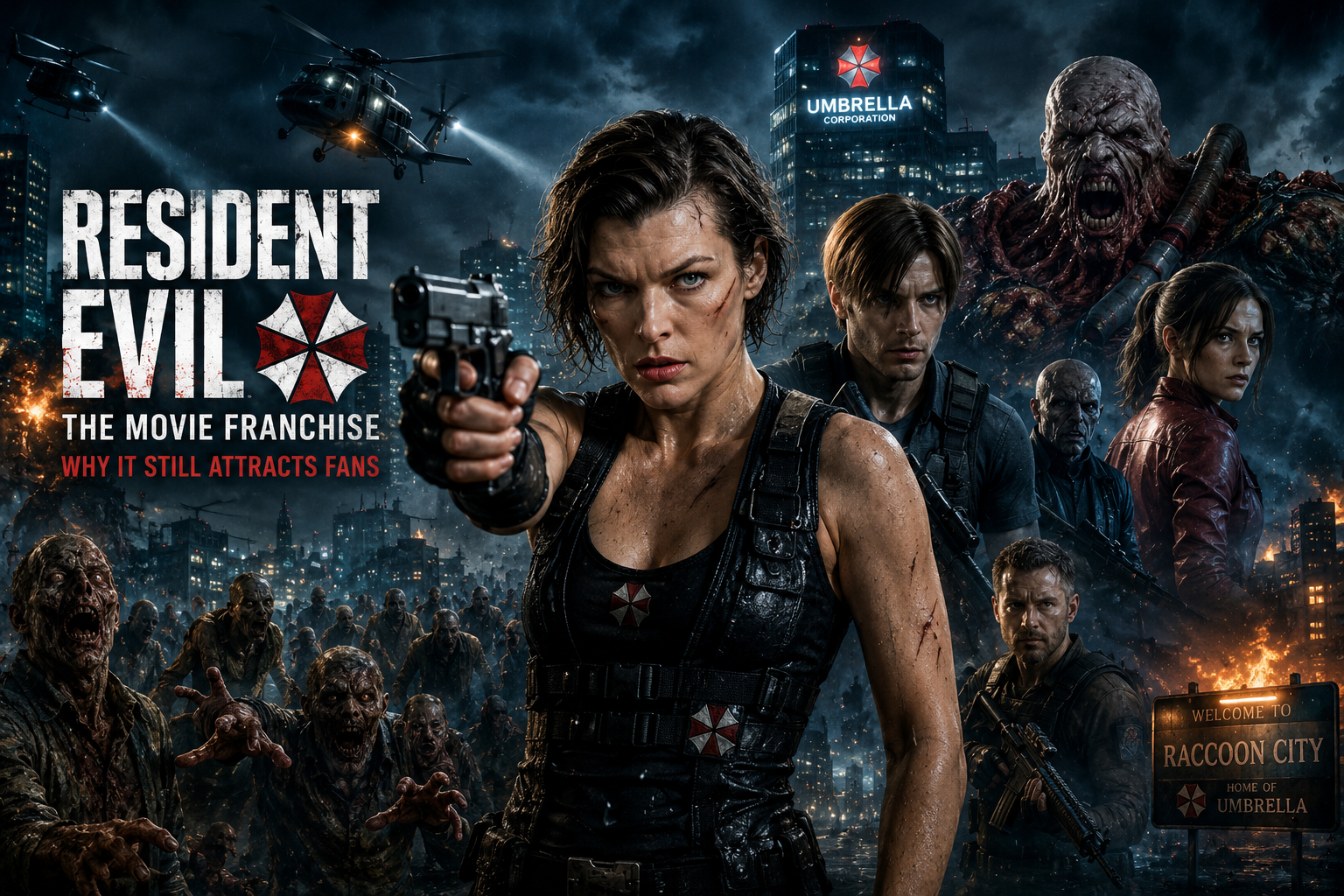
Why the Resident Evil Movie Franchise Still Attracts Fans – Few video game franchises have had as much influence on the horror genre as Resident Evil. Since its debut in 1996, the series has become one of the most recognizable names in gaming, helping define survival horror for multiple generations of players. Its terrifying creatures, suspenseful atmosphere, and memorable characters have made it a global phenomenon.
The franchise’s success eventually expanded beyond video games and into cinema. Over the years, the Resident Evil movie franchise has grown into one of the most commercially successful video game adaptations in Hollywood history. Despite receiving mixed reactions from critics and longtime fans of the games, the films continue to attract audiences around the world.
So why does the Resident Evil movie franchise remain so popular after more than two decades? The answer lies in a combination of action-packed entertainment, iconic monsters, franchise loyalty, evolving storytelling, and the enduring appeal of the Resident Evil universe itself.
The Origins of the Resident Evil Film Franchise
The first Resident Evil movie was released in 2002 and directed by Paul W. S. Anderson. Rather than directly adapting the storyline of the original games, the film introduced a new protagonist, Alice, while drawing inspiration from the broader world of Resident Evil.
The movie focused on the outbreak of a deadly virus created by the Umbrella Corporation, a powerful organization whose experiments lead to catastrophic consequences. Audiences were introduced to zombies, mutated creatures, underground laboratories, and large-scale conspiracies that would become recurring elements throughout the franchise.
Although some fans expected a more faithful adaptation of the games, the film’s commercial success proved that there was strong interest in cinematic stories set within the Resident Evil universe.
A Unique Blend of Horror and Action
One of the biggest reasons the franchise continues to attract fans is its successful combination of horror and action.
Traditional zombie films often focus heavily on suspense and survival. The Resident Evil movies, however, evolved into large-scale action spectacles that blended horror elements with high-energy combat sequences.
This hybrid approach broadened the franchise’s appeal.
Horror fans enjoyed the monsters, suspense, and apocalyptic atmosphere, while action enthusiasts appreciated the fast-paced fights, explosive set pieces, and larger-than-life battles.
By combining multiple genres, the films attracted a wider audience than many traditional horror movies.
The Appeal of Alice
One of the most significant differences between the games and the films is the introduction of Alice.
Played by Milla Jovovich, Alice became the central figure of the movie franchise and one of its most recognizable elements. Over multiple films, audiences followed her journey from an amnesiac survivor to a powerful warrior battling the forces of Umbrella.
Her character helped provide continuity throughout the series.
While game adaptations often struggle to establish a consistent cinematic identity, Alice gave the movies a clear focal point. Her determination, resilience, and evolving abilities made her a compelling action hero for many viewers.
Even fans who were unfamiliar with the games could easily connect with her story.
Iconic Monsters Never Go Out of Style
The monsters of Resident Evil remain one of the franchise’s greatest strengths.
Zombies may be the most recognizable enemies, but the series has always featured a wide variety of terrifying creatures. Mutated dogs, giant monsters, bio-engineered experiments, and grotesque mutations contribute to the franchise’s distinctive horror identity.
Many of these creatures originated in the games and were adapted for the screen with varying levels of fidelity.
The appearance of famous monsters often generates excitement among fans because they connect directly to memorable gaming experiences.
These creatures help distinguish Resident Evil from other zombie franchises and contribute to its lasting popularity.
The Power of the Resident Evil Brand
Brand recognition plays a major role in the franchise’s continued success.
Few gaming properties are as widely recognized as Resident Evil. Decades of successful video game releases have built a loyal global fan base that spans multiple generations.
Whenever a new movie is announced, it immediately benefits from this existing audience.
Fans are naturally curious about how familiar characters, locations, and creatures will be represented on screen. Even when opinions differ regarding adaptation choices, interest in the franchise remains strong.
The power of the Resident Evil name alone continues to attract viewers.
A Constantly Expanding Universe
Another factor behind the franchise’s longevity is its expansive world.
The Resident Evil universe contains countless stories, characters, and locations. The games have explored secret laboratories, abandoned cities, isolated villages, military facilities, and global conspiracies involving biological weapons.
This rich mythology provides filmmakers with endless opportunities for new stories.
Unlike franchises that become repetitive after a few installments, Resident Evil offers enough source material to support multiple interpretations and creative directions.
This flexibility helps keep the franchise fresh.
Nostalgia Drives Interest
Nostalgia is a powerful force in modern entertainment.
Many fans who watched the early Resident Evil movies grew up alongside the franchise. Others developed their connection through the games before later exploring the films.
Returning to familiar worlds often creates a sense of excitement and comfort.
Whether viewers are revisiting classic characters, iconic monsters, or memorable locations, nostalgia helps maintain long-term interest in the franchise.
As new generations discover Resident Evil, older fans continue to engage with the series because of their emotional attachment to its history.
Adapting to Changing Audiences
One reason the Resident Evil franchise has survived for so long is its ability to evolve.
The earliest films focused on claustrophobic horror and corporate conspiracies. Later installments embraced larger action sequences, post-apocalyptic settings, and blockbuster spectacle.
More recent adaptations have attempted to move closer to the tone and storylines of the original games.
This willingness to experiment allows the franchise to remain relevant despite changing audience expectations.
Different fans may prefer different eras of Resident Evil, but the franchise’s adaptability has helped it avoid becoming stagnant.
Strong International Appeal
The Resident Evil movies perform particularly well on a global scale.
While some Hollywood franchises rely heavily on domestic box office success, Resident Evil has consistently attracted international audiences. The themes of survival, scientific experimentation, and global catastrophe resonate across cultures.
Action-driven storytelling also translates well internationally because it relies less on language-specific humor or cultural references.
This broad appeal has contributed significantly to the franchise’s commercial success.
The Influence of Zombie Culture
The popularity of zombie entertainment has also helped sustain interest in Resident Evil.
Over the past two decades, zombies have become one of the most recognizable horror concepts in popular culture. Television series, films, games, books, and comics have all embraced the undead in various forms.
Resident Evil played an important role in keeping zombie horror relevant.
Even as trends shifted, the franchise continued to reinvent its monsters and expand its mythology. This ability to evolve alongside broader horror trends has helped maintain audience engagement.
Visual Effects and Spectacle
Modern audiences often expect blockbuster-level visual effects, and the Resident Evil movies have consistently delivered large-scale action sequences and creature designs.
From massive monster battles to citywide outbreaks, the films emphasize spectacle.
While critics sometimes debate the quality of individual installments, few would deny the franchise’s commitment to ambitious visuals and high-energy entertainment.
These elements help make the movies appealing even to viewers who have never played the games.
Fan Communities Keep the Franchise Alive
Online communities have become increasingly important in sustaining long-running franchises.
Resident Evil fans actively discuss theories, rankings, character histories, game lore, and movie adaptations across social media platforms, forums, and video-sharing websites.
Every new release generates conversations about how it compares to previous entries and how closely it follows the games.
This constant engagement helps keep the franchise visible and relevant.
The passion of the fan community plays a major role in attracting new audiences while retaining longtime supporters.
Criticism Has Not Stopped Success
One of the most interesting aspects of the Resident Evil movies is that they have often succeeded despite mixed critical reception.
Many critics have questioned the films’ narratives, adaptation choices, or emphasis on action. Yet audiences continue to watch them.
This demonstrates an important reality of entertainment: critical reviews and audience enjoyment do not always align.
For many fans, the movies provide exactly what they want—exciting action, memorable monsters, and a chance to revisit a beloved fictional universe.
Commercial success often depends more on audience engagement than critical approval.
The Future of Resident Evil on Screen
The future of the Resident Evil movie franchise remains promising.
New adaptations continue to emerge as studios explore different approaches to bringing the series to audiences. Some projects focus on greater faithfulness to the games, while others pursue original stories set within the universe.
Advances in visual effects and filmmaking technology may allow future adaptations to recreate iconic game moments more accurately than ever before.
Given the enduring popularity of both the games and the films, it is likely that Resident Evil will remain a major force in horror entertainment for years to come.
Conclusion
The Resident Evil movie franchise continues to attract fans because it offers a compelling mix of horror, action, iconic monsters, and expansive world-building. Its connection to one of gaming’s most beloved franchises provides a strong foundation, while memorable characters like Alice helped establish a distinct cinematic identity.
Nostalgia, global appeal, evolving storytelling, and dedicated fan communities have all contributed to the franchise’s longevity. While opinions may differ regarding individual films, the overall success of Resident Evil demonstrates the lasting power of its universe.
More than twenty years after the first movie premiered, audiences remain fascinated by zombies, biological horrors, and the ongoing battle against the Umbrella Corporation. As long as those elements continue to captivate viewers, the Resident Evil movie franchise will remain a significant part of modern horror and action cinema.