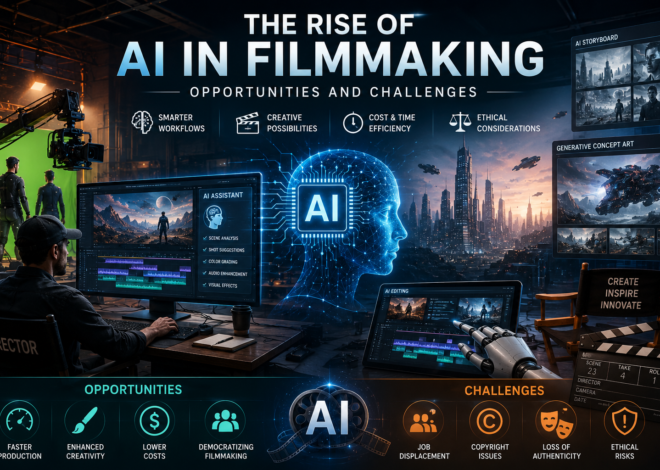
Transforming Modern Filmmaking: The Impact of Virtual Production Technology
Understanding Virtual Production Technology
Virtual production technology represents a significant evolution in the realm of filmmaking, blending the art of live-action film production with cutting-edge digital techniques. This innovative approach utilizes a combination of advanced graphics engines, such as Unreal Engine, with physical filmmaking practices to create immersive environments on set. At its core, virtual production enables filmmakers to visualize and interact with 3D environments in real-time, thereby providing unprecedented creative control during the filming process.
One of the key components of virtual production is the use of LED volume technology, which allows for the projection of high-quality digital backgrounds onto large screens that surround the scene. This contrasts with traditional methods where green screens were often employed, requiring extensive post-production for background insertion. The LED volume not only enhances the aesthetic quality of the footage but also allows for realistic lighting that interacts with live-action performances, thereby creating a seamless blend of physical and digital elements.
Moreover, virtual production technology fosters collaboration among various departments in a filmmaking project. From pre-visualization to on-set execution, all teams, including cinematographers, production designers, and visual effects artists, work in-sync to achieve a cohesive vision. The integration of film technology into the production process facilitates quicker decision-making and fosters creativity in real-time adjustments. By enabling directors and cinematographers to see how digital elements interact with live-action, virtual production stands as a game-changer in modern filmmaking.
As this technology continues to evolve, the film industry is witnessing a substantial shift from conventional filmmaking techniques to more innovative solutions. Filmmakers who embrace these advancements can explore new storytelling possibilities, ultimately enhancing the viewer’s experience through captivating visual narratives.
The Role of LED Volume Stages
LED volume stages have emerged as pivotal elements in virtual production, representing a significant shift in filmmaking practices. Integrating advanced film technology with interactive environments, these stages utilize high-resolution LED screens to create dynamic backgrounds that respond in real-time to camera movements. By replacing traditional green screen methodologies, filmmakers are afforded a more immersive and visually accurate setting, which enhances the overall production quality.
The visual capabilities of LED volume stages are impressive. Unlike green screens, which require extensive post-production for background integration, LED setups allow filmmakers to capture foreground elements alongside realistic backgrounds simultaneously. This results in a seamless blend of live-action and digital assets, thereby reducing the need for extensive editing. The level of detail and vibrancy achievable with LED volumes fosters a richer viewing experience, allowing audiences to fully engage with diverse film genres, from action-packed scenes to intimate dramas.
Moreover, LED volume stages offer unparalleled flexibility in terms of location and lighting. Filmmakers can create a myriad of environments—from sprawling cityscapes to fantastical worlds—without the logistical concerns tied to physical location shoots. The adaptive nature of these stages means they can easily adjust lighting parameters, enhancing storytelling through carefully controlled atmospheres. This fluidity particularly benefits projects that require significant visual effects, enabling directors and cinematographers to work within a more intuitive and collaborative framework.
In addition to these practical applications, the creative possibilities are virtually endless. By harnessing the capabilities of Unreal Engine, filmmakers can manipulate and design virtual environments with ease, allowing for real-time adjustments to be made on set. Thus, the integration of LED volume stages into modern filmmaking not only transforms the production process but also empowers creators to push the boundaries of their artistic visions.
Real-Time Rendering and Virtual Environments
Real-time rendering has emerged as a pivotal element in the realm of virtual production, significantly shaping the landscape of filmmaking. This advanced graphic technology enables filmmakers to instantly visualize their scenes, creating a highly interactive and immersive experience. Instead of relying solely on pre-visualizations or static mock-ups, filmmakers can now engage with dynamic virtual environments that evolve in tandem with their artistic vision.
One of the most remarkable advantages of real-time rendering is the ability to make immediate adjustments to lighting effects, camera angles, and scene layouts. By employing platforms such as Unreal Engine, filmmakers gain unprecedented control over their creative processes. This capability not only facilitates more efficient decision-making on set but also eliminates the traditional constraints of time and resource limitations that often hinder filmmaking projects. The integration of LED volume technology further enhances this experience, providing vibrant backgrounds that can seamlessly adapt to the scene being captured, all while ensuring that the visual fidelity remains high.
The interaction with real-time graphics promotes a collaborative environment, where directors, cinematographers, and production designers can negotiate creative choices through direct engagement with the virtual elements. This collaboration is crucial in contemporary filmmaking, as it allows for a more cohesive vision and alignment among the creative team. In addition, real-time rendering aids in the fine-tuning of visual effects, ensuring that the final output meets the desired standards of quality, artistry, and realism.
As filmmakers continue to explore the potentials of film technology within the sphere of virtual production, the integration of real-time rendering and virtual environments stands out as a transformative force. This evolution not only enhances the process of filmmaking but also enriches storytelling by creating more compelling narratives grounded in a collaborative and dynamic framework.
Efficiency and the Influence of Game Engines in Filmmaking
The landscape of filmmaking is rapidly evolving, largely due to advancements in film technology such as virtual production, which employs game engines like Unreal Engine and Unity. This innovative approach has significantly transformed traditional workflows, offering enhanced efficiency and creative possibilities for filmmakers.
Virtual production enables real-time rendering, which allows filmmakers to visualize scenes immediately on set. This drastically reduces the time needed for post-production adjustments, as directors and cinematographers can make informed decisions during the shoot. The integration of LED volume technology enhances this process, creating immersive backgrounds that adapt dynamically to scene changes and lighting conditions. Consequently, the cumbersome practices of traditional green screens are being replaced by more efficient and visually appealing methods.
Moreover, the incorporation of game engines in filmmaking facilitates a more collaborative atmosphere on set. With tools being familiar to both filmmakers and video game developers, it fosters a shared language between various departments. Storyboarding and pre-visualization are seamlessly integrated into the workflow, thereby making communication more effective and reducing the likelihood of misunderstandings that can lead to delays.
The influence of these game engines extends beyond just visual effects; they also empower filmmakers to experiment with storytelling in unprecedented ways. By manipulating virtual environments, creators can explore different narrative paths and visual styles in real time, making the filmmaking process more innovative. The capacity to create rich, immersive experiences enhances audience engagement, setting a new standard in cinematic storytelling.
Overall, the marriage of game engine technology with traditional filmmaking processes through virtual production has paved the way for more efficient, flexible, and engaging content creation. The future of filmmaking is undeniably intertwined with these advancements, shaping a new era of storytelling.
This content sponsored by https://www.ez96live.com/