Psychological Horror Films That Will Keep You Awake at Night
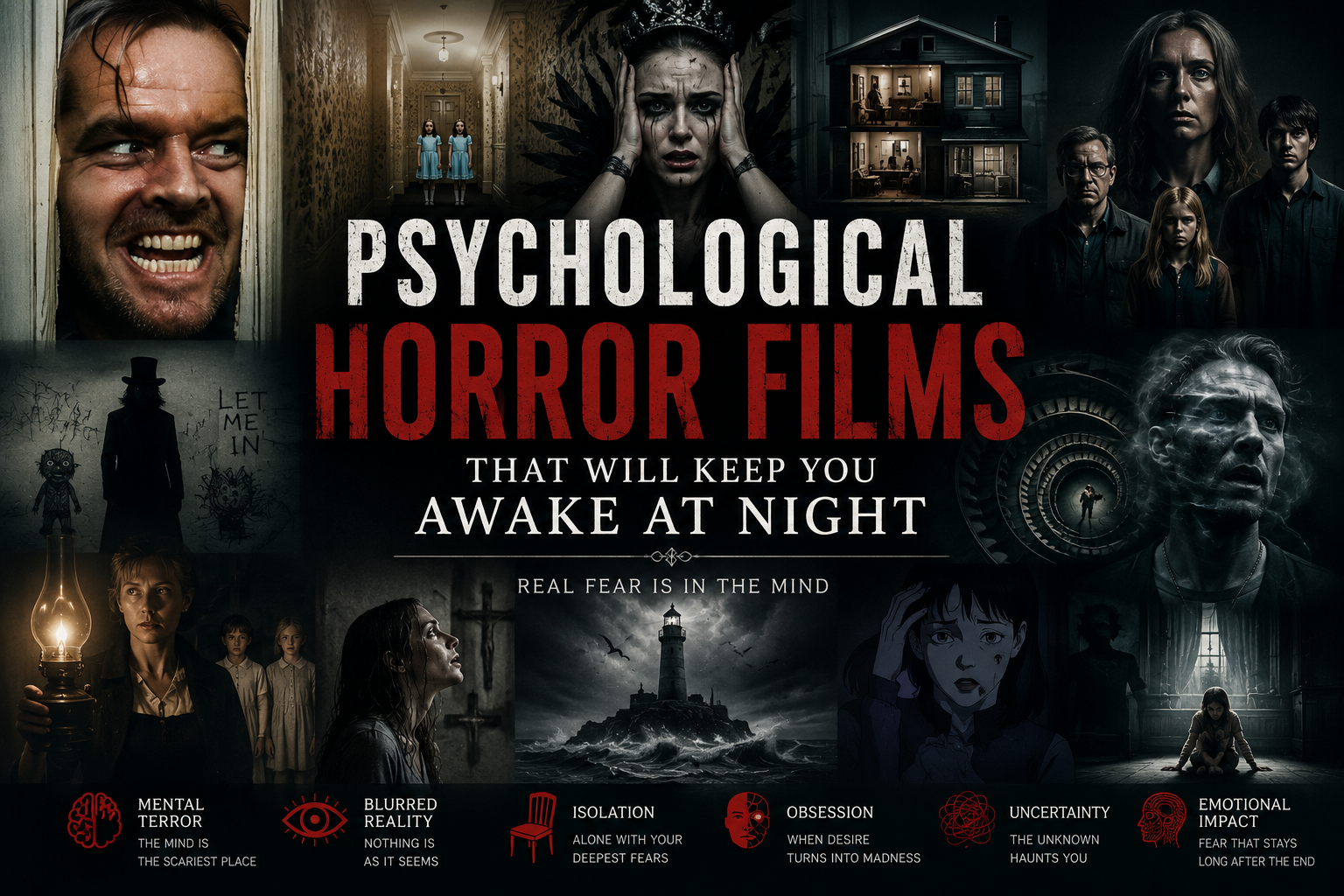
Psychological Horror Films That Will Keep You Awake at Night – Horror movies come in many forms. Some rely on monsters, supernatural creatures, or shocking jump scares to frighten audiences. Others take a different approach, creating fear that lingers long after the credits roll. Psychological horror films belong to this second category. Rather than focusing solely on external threats, they explore the darkest corners of the human mind, using paranoia, obsession, trauma, guilt, and uncertainty to create a deeply unsettling experience.
What makes psychological horror so effective is its ability to blur the line between reality and imagination. These films often leave viewers questioning what is real, who can be trusted, and whether the true danger comes from the outside world or from within the characters themselves. The result is a type of horror that stays with audiences for days, weeks, or even years after watching.
Here are some of the most unforgettable psychological horror films that have earned a reputation for keeping viewers awake at night.
What Makes Psychological Horror Different?
Unlike traditional horror movies that often depend on visible threats, psychological horror focuses on emotional and mental tension. Fear develops gradually through atmosphere, character development, and uncertainty.
These films frequently explore themes such as:
- Mental illness
- Isolation
- Trauma
- Identity crises
- Paranoia
- Obsession
- Grief
- Reality distortion
The audience becomes trapped inside the characters’ perspectives, experiencing confusion and fear alongside them. Often, the most frightening aspect is not what viewers see but what they imagine.
The Shining (1980)
Few psychological horror films have achieved the legendary status of The Shining. Directed by Stanley Kubrick and based on Stephen King’s novel, the film follows Jack Torrance, a writer who accepts a winter caretaker position at the isolated Overlook Hotel.
As winter storms cut the family off from the outside world, Jack gradually descends into madness. The hotel’s eerie atmosphere, mysterious visions, and unsettling imagery create a constant sense of dread.
What makes The Shining particularly disturbing is its ambiguity. Viewers are never entirely sure whether supernatural forces are responsible for Jack’s transformation or whether his instability existed all along. Decades after its release, the film remains one of the most analyzed and discussed horror movies ever made.
Black Swan (2010)
At first glance, Black Swan appears to be a Psychological Horror Films drama about professional ballet. However, director Darren Aronofsky transforms the story into a haunting exploration of obsession and self-destruction.
Natalie Portman delivers an unforgettable performance as Nina, a perfectionist ballerina determined to secure the lead role in Swan Lake. As pressure mounts, Nina begins experiencing disturbing hallucinations and increasingly loses touch with reality.
The film masterfully combines body horror, psychological tension, and emotional vulnerability. Its portrayal of perfectionism and identity fragmentation creates a deeply unsettling experience that stays with viewers long after the final scene.
Hereditary (2018)
Many modern horror fans consider Hereditary one of the scariest films of the twenty-first century.
Directed by Ari Aster, the film begins as a family drama centered on grief after the death of a secretive grandmother. As the story unfolds, disturbing revelations emerge, exposing hidden family traumas and terrifying secrets.
What sets Hereditary apart is its relentless emotional intensity. The horror feels deeply personal, rooted in family relationships and psychological suffering rather than simple scares. The film creates an overwhelming sense of inevitability, making audiences feel trapped alongside its characters.
Its shocking imagery and emotionally devastating moments have cemented its place as a modern psychological horror masterpiece.
The Babadook (2014)
The Babadook demonstrates how psychological horror films can use supernatural elements to explore real human emotions.
The story follows Amelia, a widowed mother struggling to raise her troubled son. After discovering a mysterious children’s book featuring a sinister creature known as the Babadook, strange and frightening events begin occurring in their home.
On the surface, the film appears to be about a monster. Beneath that layer, however, it serves as a powerful exploration of grief, depression, and emotional repression.
The Babadook itself becomes a symbol of unresolved pain that refuses to disappear. This psychological depth elevates the film beyond conventional horror and makes its themes resonate with audiences.
Jacob’s Ladder (1990)
Few films portray psychological disorientation as effectively as Jacob’s Ladder.
The story follows Jacob Singer, a Vietnam War veteran haunted by disturbing visions and fragmented memories. As reality becomes increasingly unstable, Jacob struggles to determine what is happening to him.
The film’s nightmarish imagery and dreamlike structure create constant uncertainty. Viewers experience the same confusion and paranoia as the protagonist, making the psychological horror particularly effective.
Its influence can still be seen in numerous horror games and films today, including the Silent Hill franchise.
The Others (2001)
The Others is a masterclass in atmospheric horror.
Nicole Kidman stars as Grace, a mother living with her two children in a secluded mansion after World War II. Strange events begin occurring within the house, leading Grace to suspect supernatural activity.
Rather than relying on graphic violence or excessive jump scares, the film builds tension through silence, darkness, and uncertainty. Every creaking door and shadowy hallway contributes to the growing sense of unease.
The film’s unforgettable twist ending remains one of the most memorable moments in horror cinema history.
Saint Maud (2019)
Psychological horror often examines the dangers of obsession, and Saint Maud is a powerful example.
The story follows Maud, a deeply religious hospice nurse who becomes convinced that she must save the soul of her terminally ill patient. As her devotion intensifies, her grip on reality begins to weaken.
The film expertly blurs the boundary between religious experiences and psychological breakdown. Viewers are left questioning whether Maud’s visions are divine revelations or symptoms of mental illness.
Its slow-building tension culminates in one of the most shocking endings in recent horror history.
The Lighthouse (2019)
Directed by Robert Eggers, The Lighthouse transforms isolation into psychological terror.
The film follows two lighthouse keepers stranded on a remote island. As storms rage outside, tensions between the men escalate, and reality begins to unravel.
Shot in black and white with a distinctive aspect ratio, the film creates a claustrophobic atmosphere unlike almost anything else in modern cinema.
Themes of madness, guilt, loneliness, and obsession dominate the narrative, making viewers feel increasingly trapped alongside the characters.
Perfect Blue (1997)
Psychological horror is not limited to live-action filmmaking. Satoshi Kon’s animated masterpiece Perfect Blue remains one of the most disturbing psychological thrillers ever created.
The story centers on Mima, a former pop idol attempting to transition into acting. As her career evolves, she becomes the target of a stalker while simultaneously struggling with a fractured sense of identity.
The film expertly blurs fantasy and reality, leaving audiences uncertain about what is actually happening. Its influence can be seen in numerous modern thrillers and psychological dramas.
Even decades after its release, Perfect Blue continues to unsettle viewers with its intense psychological themes.
Why These Films Stay With Us
Psychological horror films often have a lasting impact because they tap into universal fears.
Most people will never encounter ghosts, monsters, or supernatural creatures. However, nearly everyone understands feelings such as anxiety, grief, loneliness, guilt, or uncertainty. Psychological horror uses these emotions as the foundation for fear.
The genre forces audiences to confront uncomfortable questions:
- Can we trust our own minds?
- How fragile is reality?
- What happens when grief becomes overwhelming?
- How far can obsession push someone?
- Are our greatest fears external or internal?
These questions linger long after the movie ends, making psychological horror particularly memorable.
The Future of Psychological Horror Films
Psychological horror continues to evolve as filmmakers explore new storytelling techniques and social themes. Modern directors increasingly focus on mental health, trauma, identity, technology, and societal anxieties.
Streaming platforms have also expanded opportunities for unique horror stories that may not fit traditional studio formulas. As a result, audiences are seeing more experimental and emotionally complex psychological horror films than ever before.
The genre’s future looks bright because its central themes remain timeless. Human fears change with society, but the mysteries of the mind continue to provide endless inspiration for storytellers.
Conclusion
Psychological horror films offer a unique form of fear that extends beyond jump scares and monsters. By exploring the complexities of the human mind, these movies create deeply unsettling experiences that linger long after the screen goes dark.
Films such as The Shining, Black Swan, Hereditary, The Babadook, Jacob’s Ladder, The Others, Saint Maud, The Lighthouse, and Perfect Blue demonstrate the power of psychological horror at its finest. They challenge perceptions of reality, explore profound emotional struggles, and reveal that the most terrifying monsters are often the ones hidden within ourselves.
For viewers seeking horror that is intelligent, disturbing, and unforgettable, psychological horror remains one of cinema’s most powerful genres—and one that may leave you staring at the ceiling long after midnight.