The Secret Behind the Minecraft Movie Success Story
The Secret Behind the Minecraft Movie Success Story – When Hollywood first announced a movie based on Minecraft, reactions were mixed. Some fans were excited to see the world’s best-selling video game adapted for the big screen, while others questioned how a game without a traditional storyline could become a successful movie. After all, Minecraft is known for its open-ended gameplay, creative building mechanics, and limitless freedom rather than a fixed narrative.
Yet against all expectations, the Minecraft movie became one of the most talked-about video game adaptations of recent years. It attracted millions of viewers, generated significant box office revenue, and proved that even the most unconventional games can become successful cinematic experiences when handled correctly.
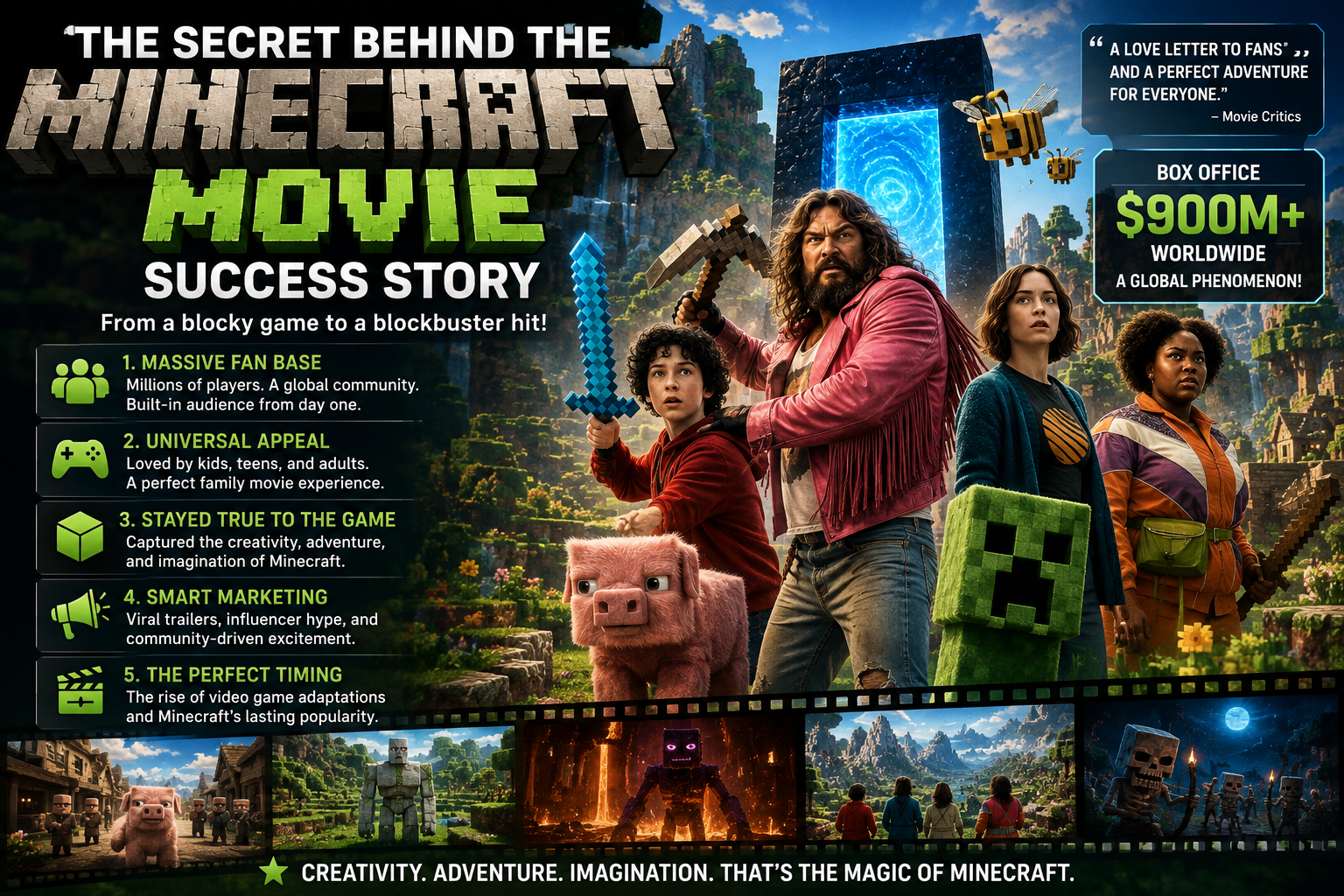
So what exactly was the secret behind the Minecraft movie success story? The answer lies in a combination of brand power, audience loyalty, creative adaptation, smart marketing, and the growing popularity of video game movies.
The Power of the Minecraft Brand
One of the biggest factors behind the movie’s success was the incredible strength of the Minecraft brand itself.
Since its original release in 2009, Minecraft has become a global phenomenon. With hundreds of millions of copies sold across multiple platforms, the game has reached players of all ages and backgrounds. Unlike many gaming franchises that appeal primarily to specific demographics, Minecraft enjoys broad popularity among children, teenagers, and adults.
Over the years, the game has evolved into more than just entertainment. It has become a cultural icon used in education, content creation, architecture, and online communities. Millions of players have spent countless hours building worlds, exploring landscapes, and sharing their creations.
Because of this massive fan base, the movie already had a built-in audience before production even began. Fans were eager to see how their favorite block-based universe would be translated to the big screen.
A Perfect Time for Video Game Adaptations
The success of the Minecraft movie did not happen in isolation.
Over the past decade, Hollywood has witnessed a dramatic improvement in the quality of video game adaptations. Earlier attempts often struggled because filmmakers tried to force games into traditional movie structures without understanding what made the source material special.
Recent successes changed that perception.
Movies and television series based on popular gaming franchises demonstrated that game adaptations could attract both fans and general audiences. These projects showed studios that respecting the original material while crafting compelling stories was the key to success.
By the time the Minecraft movie arrived, audiences were far more open to video game adaptations than they had been in previous generations. The industry had learned valuable lessons from past failures and successes, creating favorable conditions for another gaming-based blockbuster.
Turning Creativity Into a Story
One of the biggest challenges facing the filmmakers was obvious: Minecraft does not have a predefined story.
Unlike story-driven games with established characters and narratives, Minecraft provides players with a sandbox environment where they create their own adventures. This freedom is one of the game’s greatest strengths, but it also presents difficulties for adaptation.
The filmmakers solved this problem by focusing on the themes that define the Minecraft experience:
- Creativity
- Exploration
- Teamwork
- Survival
- Adventure
- Imagination
Rather than attempting to recreate a specific gameplay session, the movie captured the spirit of what players love about the game. Audiences recognized familiar environments, creatures, mechanics, and visual elements while still experiencing an original story designed for cinema.
This balance helped satisfy longtime fans while remaining accessible to newcomers.
Nostalgia Played a Major Role
Many viewers who grew up playing Minecraft are now young adults.
For this generation, the game represents an important part of childhood. Memories of building houses with friends, surviving Creeper attacks, exploring caves, and creating massive worlds are deeply connected to personal experiences.
The movie successfully tapped into this nostalgia.
Familiar sounds, visual references, iconic creatures, and recognizable locations triggered emotional connections for longtime players. Even small details could remind audiences of countless hours spent in the game.
Nostalgia has become an increasingly powerful force in modern entertainment. When combined with quality storytelling, it can create a strong emotional bond between audiences and a film.
The Minecraft movie benefited greatly from this effect.
Appealing to Multiple Generations
Another important factor behind the film’s success was its ability to attract viewers from different age groups.
Children were excited because Minecraft remains one of the most popular games in the world.
Teenagers and young adults were interested because they had grown up with the game.
Parents often accompanied their children and were already familiar with the franchise due to its popularity within their households.
This multi-generational appeal significantly expanded the movie’s potential audience. Instead of targeting a narrow demographic, the film attracted families, gaming enthusiasts, casual moviegoers, and longtime fans simultaneously.
Movies that successfully appeal to multiple generations often perform exceptionally well at the box office because they encourage group viewing experiences.
Effective Marketing and Promotion
Marketing played a crucial role in building anticipation.
The promotional campaign focused heavily on the game’s iconic visual style. Instantly recognizable blocky landscapes, familiar creatures, and references to classic gameplay elements created excitement among fans.
Trailers emphasized adventure, humor, creativity, and large-scale action while showcasing the unique world of Minecraft. This approach helped reassure fans that the filmmakers understood the source material.
Social media also amplified interest.
Gaming influencers, YouTubers, streamers, and online communities generated enormous discussion around the movie. Because Minecraft has one of the largest online fan communities in gaming history, word-of-mouth marketing became a powerful force.
The internet essentially helped promote the film long before it reached theaters.
Visual Identity Made It Stand Out
In an era when many blockbuster films can appear visually similar, Minecraft possessed a unique advantage: its instantly recognizable design.
The block-based world is unlike anything else in entertainment.
Translating this distinctive aesthetic into a cinematic format required careful creative decisions. The filmmakers managed to preserve the game’s visual identity while enhancing it for a theatrical audience.
As a result, the movie stood out from other family adventures and fantasy films.
Audiences could immediately identify the world, making the film visually memorable and highly marketable.
A strong visual identity is often one of the most valuable assets a franchise can possess, and Minecraft already had one of the most recognizable designs in modern gaming.
The Importance of Community
The Minecraft community has been one of the game’s greatest strengths for more than a decade.
Millions of players have contributed to the game’s ongoing popularity through:
- User-generated content
- Custom maps
- Mods
- YouTube videos
- Livestreams
- Tutorials
- Online servers
This community-driven ecosystem helped keep interest in the franchise alive for years.
When the movie was announced, community members immediately began discussing theories, sharing reactions, and creating content related to the project.
The enthusiasm of the fan base created momentum that traditional advertising alone could never achieve.
In many ways, the community became one of the movie’s most effective promotional tools.
Hollywood Finally Understood Gamers
For many years, gamers felt that Hollywood misunderstood video game culture.
Studios often treated games as simple intellectual property rather than recognizing the emotional connections players formed with them.
The success of the Minecraft movie reflects a broader shift in how the entertainment industry approaches gaming adaptations.
Filmmakers increasingly recognize that fans care deeply about authenticity. They want adaptations that respect the original experience while offering something new.
By embracing the essence of Minecraft instead of trying to fundamentally change it, the filmmakers earned the trust of audiences.
This trust translated into strong ticket sales and positive engagement.
What the Success Means for Future Adaptations
The success of the Minecraft movie sends an important message to Hollywood.
Even games without traditional narratives can become successful films if creators understand what makes them special.
Rather than focusing solely on plot, filmmakers can build stories around themes, experiences, and emotional connections that resonate with players.
The movie also demonstrates the growing influence of gaming culture within mainstream entertainment. Video games are no longer viewed as niche hobbies. They are global cultural phenomena capable of generating blockbuster movies, television series, merchandise, and entire entertainment ecosystems.
As a result, more studios are likely to explore adaptations of unconventional gaming properties in the future.
Conclusion
The secret behind the Minecraft movie success story was not a single factor but a combination of strengths working together. The power of the brand, a massive global fan base, effective marketing, nostalgic appeal, strong visual identity, and a respectful adaptation strategy all contributed to the film’s achievements.
Most importantly, the movie captured the creativity, imagination, and sense of adventure that have made Minecraft beloved by millions of players around the world. Instead of simply adapting a game, it celebrated the experience of playing it.
In doing so, the Minecraft movie proved that even a world built from simple blocks can become the foundation for a blockbuster success story.